
shell
ผู้เยี่ยมชม
benducket3211@gmail.com
POM Material Comparison for Machined Parts: Which Engineering Plastic Is the Best Choice for Precision CNC Manufacturing? (71 อ่าน)
26 ก.ค. 2569 13:42
Selecting the right engineering plastic is one of the most important decisions in precision manufacturing. The material used for CNC machining directly affects dimensional accuracy, surface finish, wear resistance, durability, and the overall lifespan of a component. A detailed POM material comparison for machined parts helps engineers, manufacturers, and product designers understand which type of polyoxymethylene (POM) offers the best performance for demanding industrial applications.
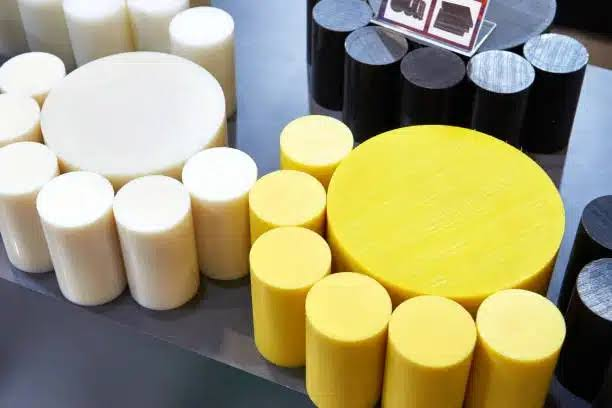
POM, also known as acetal, is one of the most widely used engineering thermoplastics because it combines high mechanical strength, low friction, excellent dimensional stability, and superior machinability. It is available in two primary forms: POM-C (copolymer) and POM-H (homopolymer, commonly known by the Delrin brand). Although both materials belong to the same family, their unique characteristics make them suitable for different machining requirements and operating environments.
Understanding this POM material comparison for machined parts is essential for industries such as automotive manufacturing, aerospace engineering, robotics, industrial automation, medical devices, electronics, food processing, and custom CNC machining. Choosing the right POM grade improves product quality, extends service life, and reduces production and maintenance costs.
Material Performance and Mechanical Characteristics
A complete POM material comparison for machined parts begins with evaluating the mechanical performance of each material. Both POM-C and POM-H provide excellent tensile strength, high stiffness, low friction, and impressive wear resistance. These properties allow manufacturers to replace metal components with lightweight engineering plastics while maintaining outstanding mechanical reliability.
POM-H offers slightly higher tensile strength, greater rigidity, and improved fatigue resistance because of its homopolymer molecular structure. These characteristics make it particularly suitable for precision mechanical components that operate under continuous stress or repeated movement. High-performance gears, bearings, bushings, rollers, structural supports, and precision mechanical assemblies often benefit from the superior strength of POM-H.
POM-C provides excellent overall mechanical properties while offering enhanced chemical resistance and improved thermal stability. Its balanced structure allows it to maintain reliable performance in humid environments and applications involving industrial chemicals, cleaning agents, fuels, lubricants, and water exposure. This makes POM-C an ideal material for equipment used in food processing, pharmaceutical manufacturing, laboratory systems, and fluid-handling applications.
Both materials exhibit excellent dimensional stability because they absorb very little moisture. Precision-machined parts maintain tight tolerances throughout their operational life, ensuring consistent performance in industries where accuracy is critical.
CNC Machining Performance and Manufacturing Efficiency
One of the most significant aspects of a POM material comparison for machined parts is machining performance. Both POM-C and POM-H are considered among the easiest engineering plastics to machine using CNC equipment. They produce smooth chips, clean edges, and excellent surface finishes while placing minimal stress on cutting tools.
POM-H machines exceptionally well because of its higher rigidity and structural consistency. During CNC milling, turning, drilling, and threading, the material maintains dimensional accuracy while resisting deformation. Manufacturers often choose POM-H when producing complex components requiring tight tolerances, intricate geometries, and excellent surface quality.
POM-C also demonstrates outstanding machinability while offering greater stability in applications exposed to changing environmental conditions. Its ability to machine consistently while maintaining chemical resistance makes it particularly valuable for manufacturers producing components intended for wet or chemically demanding environments.
The excellent machining characteristics of both materials reduce production time, extend tool life, and minimize secondary finishing operations. Manufacturers can achieve highly accurate parts with reduced material waste, improving production efficiency while lowering manufacturing costs.
Precision CNC machining companies frequently recommend POM materials for custom gears, bearings, valve seats, conveyor parts, electrical insulators, sliding components, mechanical housings, and precision engineering assemblies because they consistently deliver high-quality machining results.
Environmental Resistance and Operational Durability
A reliable POM material comparison for machined parts also examines long-term performance under real operating conditions. Material durability is often just as important as machining quality because components must maintain their properties throughout years of continuous service.
POM-H performs exceptionally well in dry environments where mechanical strength and fatigue resistance are the highest priorities. Components subjected to repetitive loading or continuous movement maintain excellent structural integrity, making POM-H suitable for industrial automation, robotics, automotive systems, and aerospace applications.
POM-C offers superior resistance to moisture, hydrolysis, and aggressive industrial chemicals. Components exposed to water, cleaning solutions, and sanitation procedures retain their mechanical properties even after prolonged service. This makes POM-C particularly valuable in food processing equipment, medical devices, pharmaceutical machinery, water treatment systems, and chemical processing facilities.
Both materials provide excellent resistance to oils, fuels, solvents, and many industrial lubricants. Their naturally low coefficient of friction reduces wear between moving components while minimizing lubrication requirements. These characteristics improve operational efficiency, lower maintenance costs, and extend equipment lifespan.
Electrical insulation is another advantage shared by both materials. Their non-conductive properties make them suitable for electrical connectors, switch components, sensor housings, insulating parts, and electronic assemblies requiring both mechanical durability and electrical safety.
The combination of mechanical strength, wear resistance, dimensional stability, and environmental durability makes POM one of the most trusted engineering plastics used in precision manufacturing today.
Material Selection for Precision Engineering
Selecting the right material requires balancing mechanical performance, environmental exposure, manufacturing efficiency, and long-term reliability. A detailed POM material comparison for machined parts demonstrates that each POM grade offers distinct advantages depending on the intended application.
Projects requiring maximum mechanical strength, greater rigidity, and outstanding fatigue resistance often benefit from POM-H. Its superior structural performance makes it ideal for demanding mechanical systems operating under continuous stress, including automotive components, aerospace assemblies, robotics, and industrial machinery.
Applications involving moisture, chemicals, sanitation procedures, and challenging operating environments generally perform better with POM-C because of its enhanced chemical stability and superior hydrolysis resistance. Industries such as medical manufacturing, food production, pharmaceutical processing, and water treatment frequently rely on POM-C for long-lasting, dependable performance.
As advanced manufacturing technologies continue evolving, industries are increasingly replacing traditional metal components with lightweight engineering plastics. POM materials continue gaining popularity because they reduce system weight, improve corrosion resistance, simplify machining, and provide exceptional mechanical performance.
Modern CNC machining, industrial automation, electric vehicles, renewable energy systems, and precision engineering all benefit from the versatility of POM materials. Their ability to combine strength, precision, low friction, and long-term durability makes them an essential material for high-performance engineering applications.
Conclusion
A thorough POM material comparison for machined parts demonstrates that both POM-C and POM-H are exceptional engineering plastics capable of meeting demanding industrial requirements. POM-H offers higher tensile strength, greater stiffness, superior hardness, and excellent fatigue resistance, making it ideal for high-load mechanical applications. POM-C provides outstanding chemical resistance, enhanced moisture stability, reliable dimensional accuracy, and excellent long-term performance in harsh operating environments. By carefully evaluating machining requirements, environmental conditions, mechanical demands, and production objectives, engineers and manufacturers can confidently select the POM material that delivers the best balance of precision, durability, efficiency, and long-term value for CNC-machined parts.
43.242.176.24
shell
ผู้เยี่ยมชม
benducket3211@gmail.com
carpet cleaning
ผู้เยี่ยมชม
akknowledgeedge@gmail.com
7 ส.ค. 2569 16:38 #1
Pressure washing is a great way to refresh patios, driveways, and outdoor surfaces, but don't forget about the inside of your home too. After exterior cleaning,cheapest carpet cleaning liverpool can help remove the dust, dirt, and allergens that build up indoors over time. Professional carpet cleaning leaves your home looking and feeling much fresher. I found this useful resource for affordable carpet cleaning in Liverpool. Thanks for sharing this informative post!
39.34.171.115
carpet cleaning
ผู้เยี่ยมชม
akknowledgeedge@gmail.com